
Last updated November 23, 2026
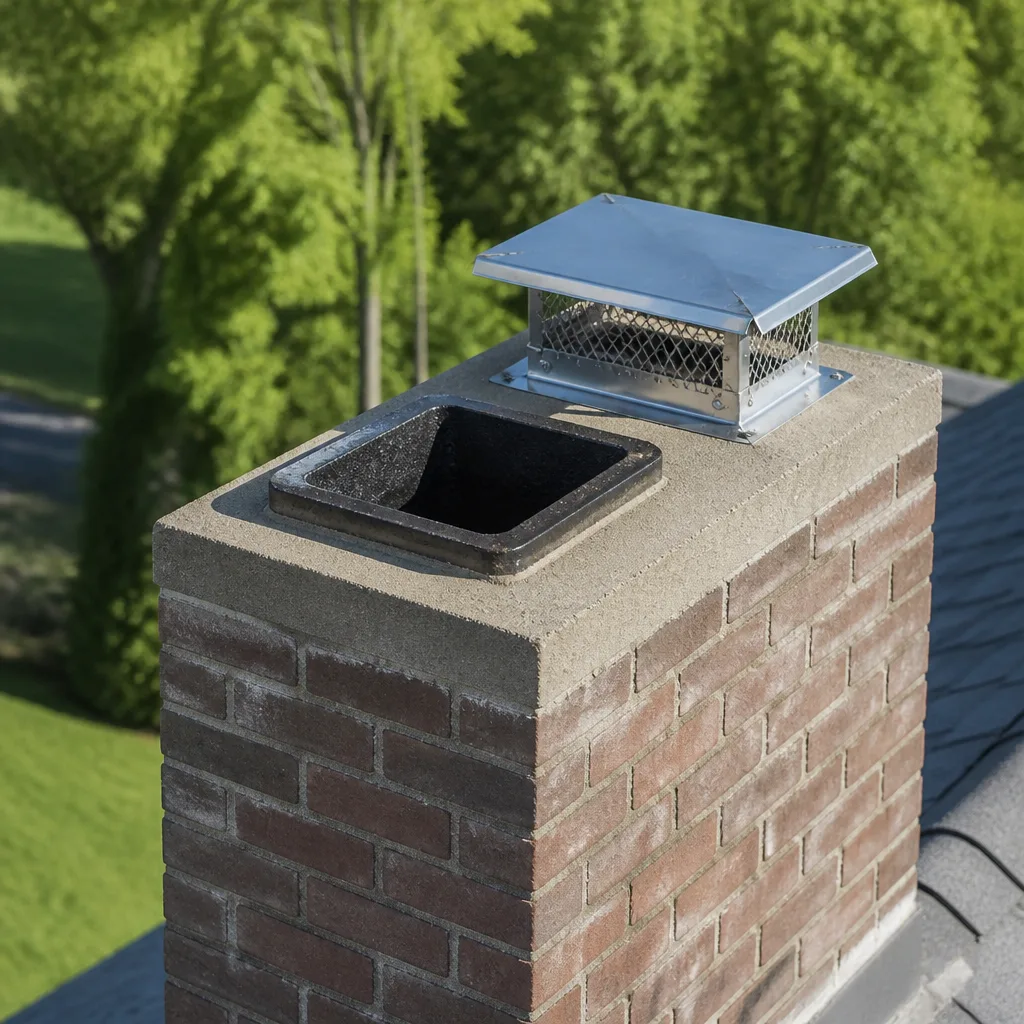 Sweep & inspection
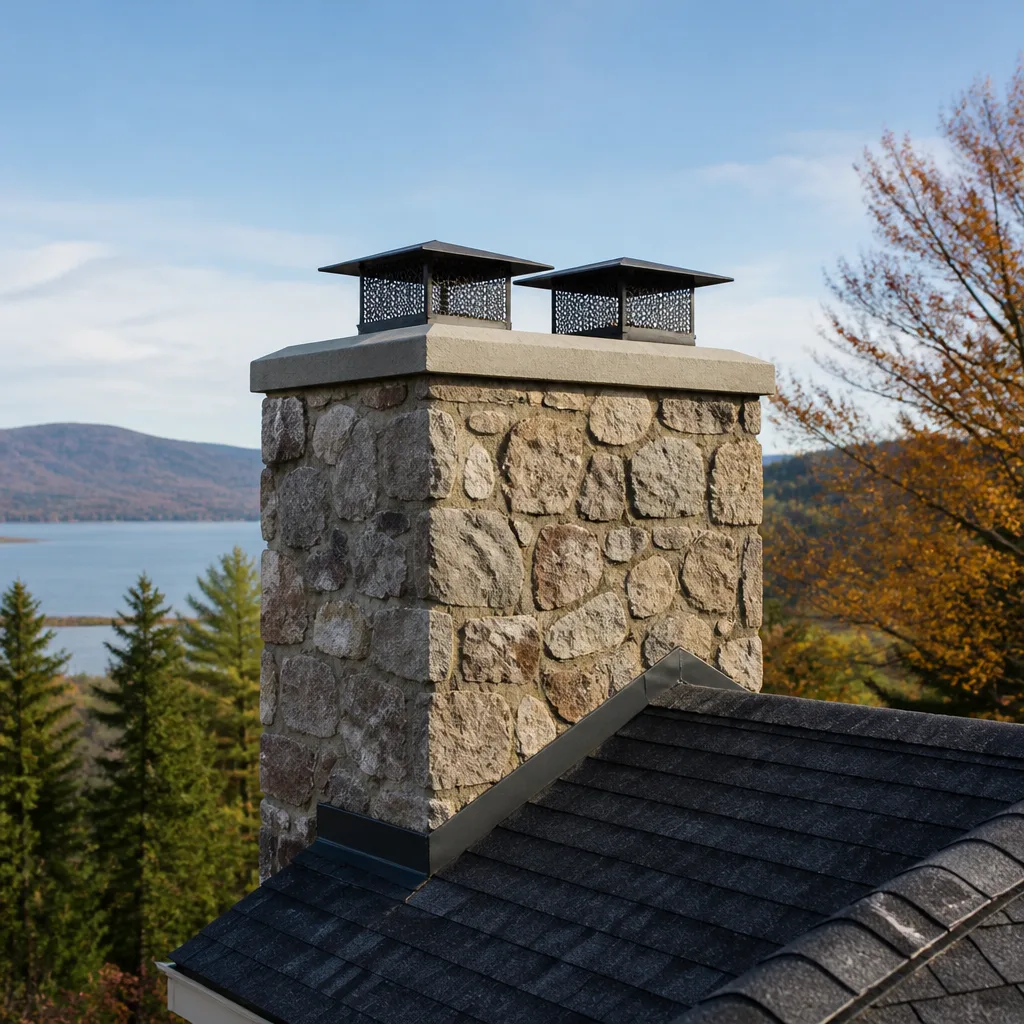 Caps & crowns
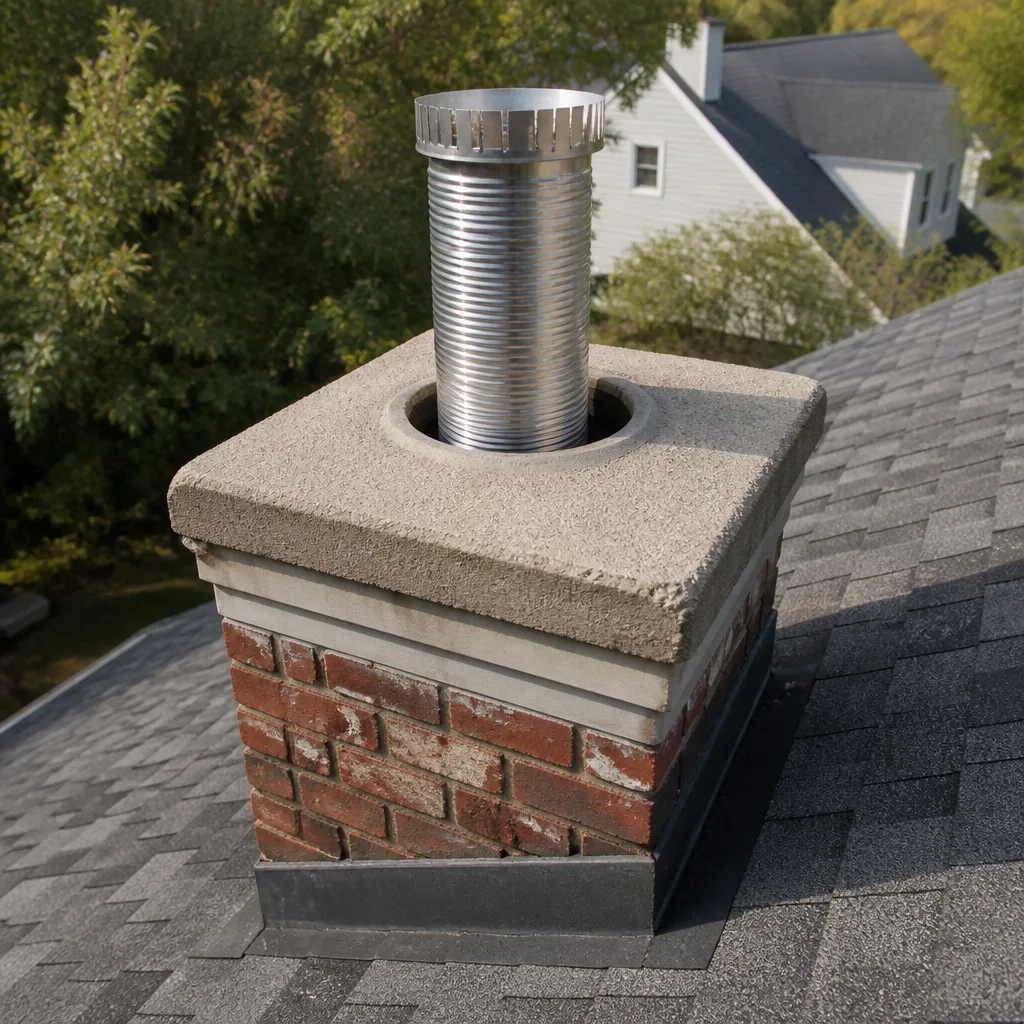 Flue relining
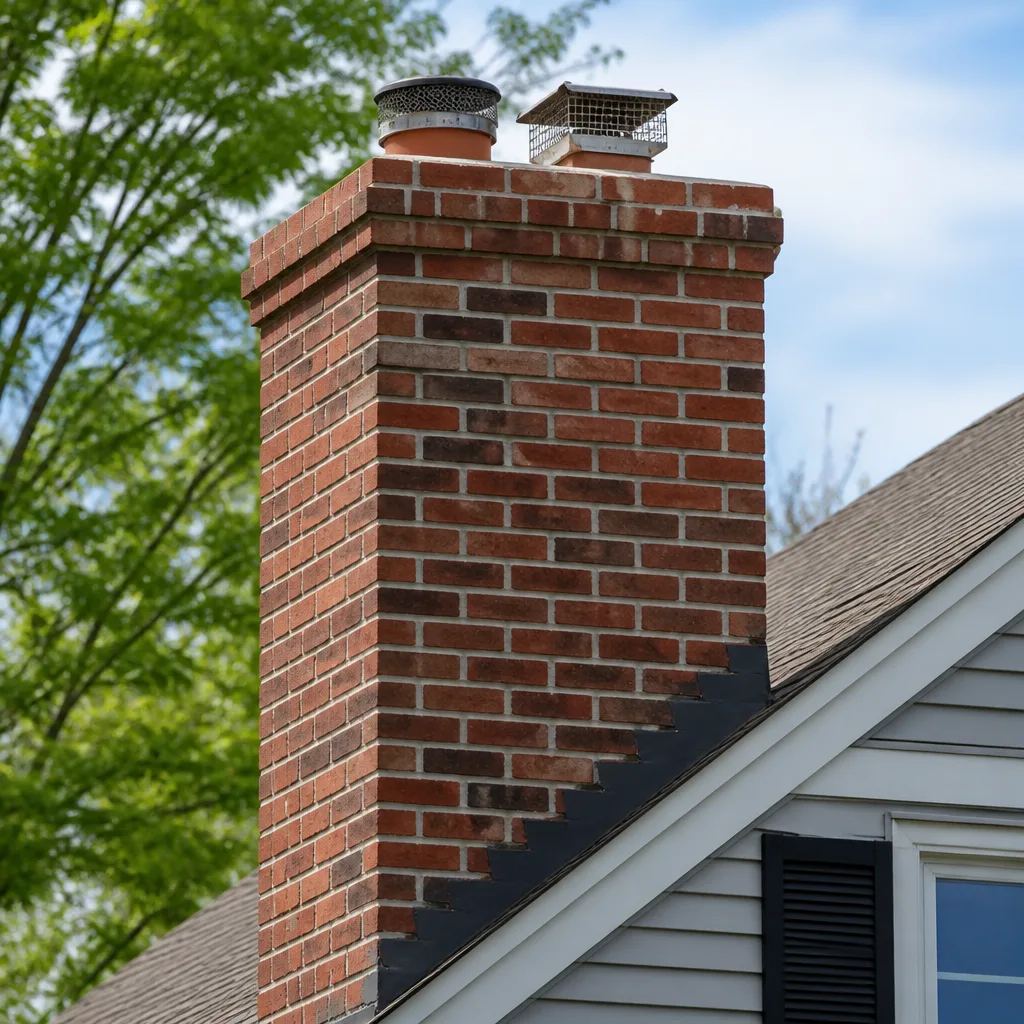 Masonry repair
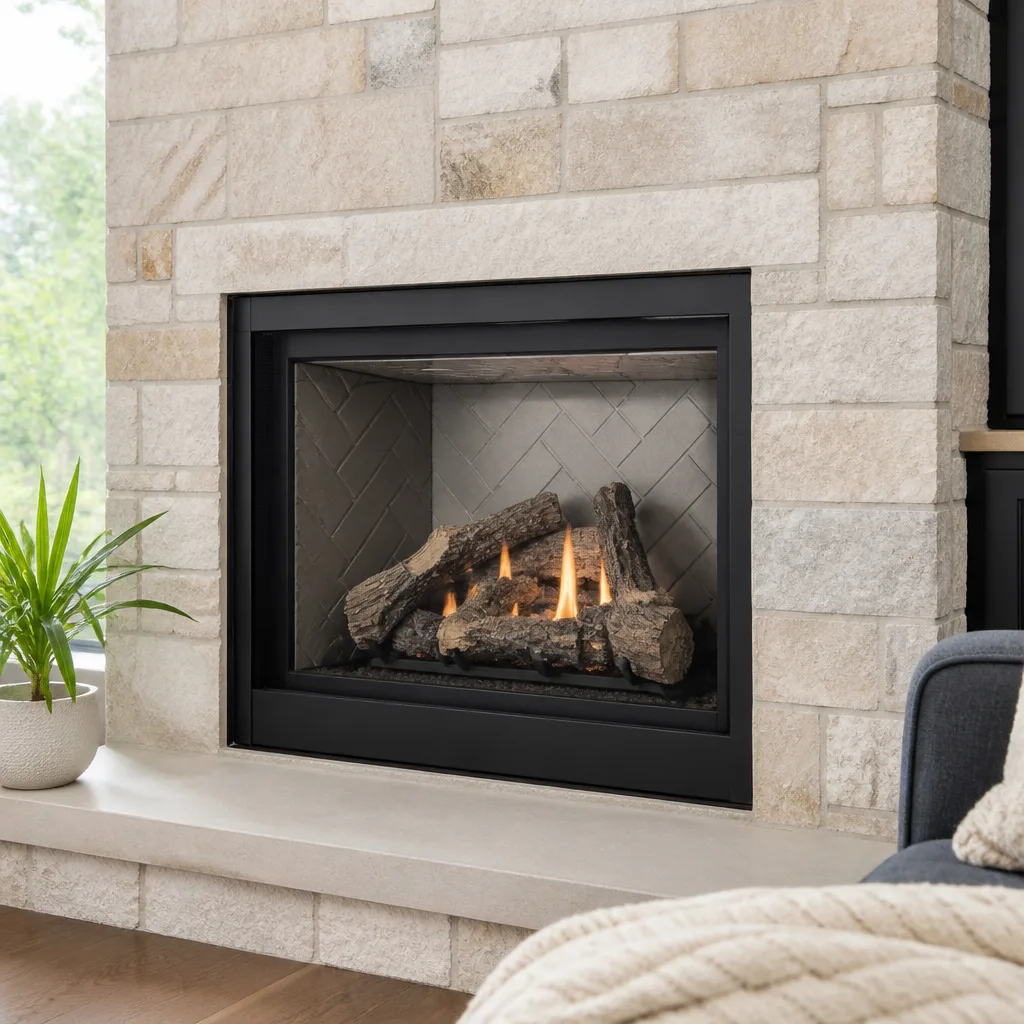 Gas fireplace service
Level 1 sweep and inspection to the NFPA 211 annual standard - flue, crown, cap, and flashing checked and photographed
Chimney sweep logs do not sweep chimneys. They loosen some creosote - which then falls where a brush and vacuum still have to collect it.
Chimney Cleaning Warning Signs: A Five Points Homeowner’s Reference Guide
Most chimney warning signs get misread in one of two directions. Either they get ignored because they look cosmetic, or they get treated as emergencies because nobody can tell you what they actually mean. That white staining on your brick isn’t decoration and it isn’t necessarily a crisis – it’s water telling you exactly where your masonry is absorbing moisture and where it will crack first. This guide breaks down each warning sign by its underlying cause, sorts the genuinely urgent from the ones with a reasonable service window, and shows you how to document what you’re seeing so a technician arrives informed. Five Points homeowners who understand the “why” behind each symptom make better repair decisions.
Quick Answer
The warning signs that matter most on a chimney are water migration (white staining, rust, crumbling mortar), draft problems (smoke rollback, weak fires, smoky odors), and internal buildup or obstruction (creosote, animal nests, cracked flue tiles). Of these, a strong chimney odor with no fire lit, smoke entering the room, or visible flue deterioration are the ones worth scheduling promptly. Most other signs – a worn cap, minor crown cracking, light exterior staining – have a reasonable service window measured in weeks, not hours. A diagnostic-first inspection tells you which bucket you’re in.
Styles & brands we work with
- Sweep & inspection
- Caps & crowns
- Flue relining
- Masonry repair
- Gas fireplace service
Table of Contents
- Efflorescence and White Staining: The Water Migration Indicator
- Exterior Warning Signs You Can Assess From the Ground
- Interior Signs: Odors, Drafting, and Staining Around the Firebox
- Cosmetic vs. Structural: How to Tell the Difference
- Which Warning Signs Are Genuinely Urgent
- How to Document Warning Signs Before Your Service Call
- Creosote and the Signs You Can’t See From Outside
- Common Mistakes to Avoid
Efflorescence and White Staining: The Water Migration Indicator
White, chalky deposits on brick or mortar are called efflorescence, and they’re the single most misunderstood chimney warning sign we encounter in Five Points. Homeowners often assume it’s a cleaning issue or leftover residue. It’s actually salt drawn to the surface as moisture moves through the masonry and evaporates. The staining isn’t the problem itself – it’s a map. Where the white deposits concentrate tells you which part of the chimney is absorbing water and, by extension, where the mortar and brick will fail first.
Here’s what the pattern means:
- Staining concentrated near the crown: water is getting past a failing crown or cap. The crown is the concrete cap at the very top; if it’s cracked or sloping the wrong way, water pools and seeps down through the masonry below.
- Staining mid-shaft in horizontal bands: often a sign that water is penetrating through cracked mortar joints or a deteriorating flashing detail where the chimney meets the roof.
- Staining concentrated at the base or firebox surround: water is traveling down the interior of the flue or behind the masonry and showing up where it collects. This pattern can point to a missing cap, a failed crown, or a liner that’s no longer shedding water.
The counterintuitive part: efflorescence isn’t a sign your chimney is wet right now. It’s a sign it has been wet repeatedly and is drying out through the masonry. That’s why ignoring it doesn’t self-correct. Each wet-and-dry cycle pushes more salt to the surface and widens the micro-pores moisture travels through. In our experience, efflorescence that’s been present for a couple of seasons almost always comes with mortar joint erosion underneath the white crust.
The good news is that it’s diagnosable. A technician can assess the crown, the cap, the flashing, and the mortar joints, then tell you whether the fix is a crown repair, a cap replacement, or repointing the masonry. We work with caps and crowns from Gelco and Olympia Chimney specifically because generic hardware-store caps fail at the seal, and a failed seal is exactly what produces efflorescence in the first place. The right material for your flue matters here more than the price of the part.
Exterior Warning Signs You Can Assess From the Ground
You can build a fairly accurate picture of your chimney’s condition without climbing on the roof. Most of the warning signs that matter are visible from the yard, often with a pair of binoculars. Here’s what to look for, and what each one actually indicates.
Mortar Joints and Brick Faces
Crumbling, sandy, or recessed mortar joints are the most reliable exterior indicator that repointing is in your future. When joints recede, water has more surface area to enter. Look for joints that have lost more than a few millimeters of depth, or mortar that crumbles when you touch it from a ladder. Brick faces that are spalling – flaking off in layers – signal that moisture inside the brick is freezing and expanding, which is roughly the same mechanism that produces potholes in asphalt.
The Crown
The crown is the sloped concrete or mortar cap at the very top. It should overhang the chimney slightly and shed water away from the masonry. Cracks, a flat top (instead of sloped), or a crown that’s separated from the flue tile all mean water is getting in. A cracked crown is one of the most common Five Points warning signs we find, and it’s also one of the most cost-effective repairs when caught before the water damage works its way down.
The Cap and Spark Screen
A missing or damaged chimney cap is a standing invitation to three problems: water, animals, and sparks. A cap that’s lost its screen or come loose lets rain pour straight into the flue, lets birds and squirrels nest inside, and lets embers escape onto the roof. If your cap is rusted through or sitting crooked, that’s a prompt-fix, not a wait-and-see.
Flashing
The metal flashing where the chimney meets the roof is a frequent culprit behind interior leaks that homeowners assume are chimney problems. Rusted, lifted, or tar-patched flashing lets water in behind the chimney, and it often shows up as staining on the ceiling or the chimney breast inside the house. This is a roofing-adjacent repair, and a chimney specialist can usually tell you whether it’s flashing or crown work that’s needed.
Interior Signs: Odors, Drafting, and Staining Around the Firebox
The signs you’ll notice inside the house are often more informative than what you can see outside, because they point to the part of the system that carries smoke and combustion gases. Here’s how to map each one to its likely source.
Smoky Odors With No Fire Lit
A persistent smoky smell in the house when the fireplace is cold is one of the most common reasons Five Points homeowners call us. The cause is usually one of three things: creosote buildup in the flue that off-gasses when the humidity rises, a negative-pressure issue pulling air down the chimney, or an obstruction in the flue (a nest, a fallen tile, a sagging damper). The odor alone isn’t a fire risk, but it’s a reliable signal that the flue hasn’t been cleaned or inspected in a while.
Smoke Rollback or Weak Draft
If smoke enters the room rather than going up the flue, the chimney isn’t drafting properly. Causes range from a flue that’s too small for the fireplace opening, to a chimney that’s shorter than the surrounding roofline, to a blockage in the flue, to a house that’s depressurized by a modern exhaust fan or a tightly sealed building envelope. Smoke rollback is worth diagnosing promptly because a persistently under-drafting chimney doesn’t just smoke – it can let combustion byproducts linger in the room.
Staining Around the Firebox
Dark staining on the masonry surround or the wall above the firebox usually indicates smoke escaping the firebox rather than the flue. Causes include a damaged damper, a firebox that’s larger than the flue can handle, or failed mortar joints behind the surround. If the staining is accompanied by crumbling mortar or a soft feel to the firebox brick, that’s structural and worth inspecting.
Rust on the Damper or Firebox Hardware
Rust on the damper, the firebox grate, or the surround hardware points to moisture making its way down the flue. The most common sources are a missing cap or a crown that’s letting water in. Rust on hardware is almost always a sign of an upstream water problem, not a hardware problem.
Cosmetic vs. Structural: How to Tell the Difference
The most useful skill you can build as a homeowner is separating cosmetic issues from structural ones. That distinction is what lets you have an honest conversation about urgency instead of guessing. Here’s a practical framework.
Cosmetic signs include:
- Surface discoloration on brick without crumbling or spalling underneath.
- A cap that’s faded or has lost its paint but is still firmly attached and screening.
- Light efflorescence that wipes away and doesn’t return quickly.
- Minor hairline cracks in the crown that haven’t widened or spread.
Structural signs include:
- Spalling brick faces, or brick that flakes when you rub it.
- Mortar joints that have receded more than a few millimeters, or that crumble when you probe them.
- A crown that’s separated from the flue tile or sloped the wrong way.
- Any visible lean or curve in the chimney shaft.
- Efflorescence that returns within weeks of cleaning.
- Interior rust, smoke rollback, or staining around the firebox.
The rule of thumb: cosmetic signs can wait a season. Structural signs should be diagnosed before the next heating season, or sooner if they’re growing. If you’re not sure which bucket a sign falls into, take a photo and describe it – a technician can tell you over the phone whether it’s a wait-and-see or a schedule-now.
The reason structural signs matter is that they speed up. Water that enters one failed mortar joint widens the pore network the next time it rains. A crown that’s cracked in February is usually a crown that’s failed by the following winter. Restore before you replace, always – but restore early, not late.
Which Warning Signs Are Genuinely Urgent
Not every warning sign is an emergency, and we tell homeowners that plainly. But a few are worth treating as prompt. Here are the ones we’d want to see within a few days, not a few months.
- Smoke rollback into the room with no obvious cause – the chimney isn’t venting properly, and combustion gases are not going where they should.
- A strong, persistent chimney odor with no fire lit, especially after a warm spell – creosote off-gassing or an obstruction.
- Visible animal activity or nesting material in the firebox or at the flue top – a bird or squirrel nest in the chimney is an obstruction risk and a blockage.
- Falling debris in the firebox – flue tiles, mortar, or brick fragments landing on the firebox floor mean the flue lining is failing and needs a Level II inspection.
- Water visibly entering the firebox during rain – a missing cap, failed crown, or flashing problem, all worth fixing before freeze-thaw cycles begin.
If you’re seeing any of these, don’t burn until the chimney’s been looked at. That’s the one piece of advice we repeat most often. A chimney that’s drafting poorly, blocked, or venting water isn’t just inefficient – it’s letting combustion byproducts into the house. Carbon monoxide is a genuine concern with a compromised flue, and it’s a hazard you can’t see or smell. That’s the accurate risk, not a scare tactic. A working flue is the difference between a fireplace that’s safe to use and one that isn’t.
The warning signs with a reasonable service window – efflorescence without spalling, a slightly cracked crown, minor exterior staining, a faded but intact cap – can typically wait a few weeks. A technician can tell you which is which during a diagnostic visit.
How to Document Warning Signs Before Your Service Call
One of the most useful things you can do as a homeowner is arrive at your service call with a few well-taken photos and a short note. A technician who can see the efflorescence pattern, the cap condition, and the firebox interior before arriving starts with a hypothesis instead of a blank slate. Here’s how to document what you’re seeing.
- Photograph the whole chimney from the ground. Step back far enough to get the crown, cap, and full shaft in frame. Take a second photo closer to the crown.
- Take a close-up of efflorescence or staining. Use your phone’s zoom, and try to capture the pattern, not just a single spot. The pattern is the information.
- Photograph the firebox interior. Include the damper, the firebox floor, the surround, and the wall above. Use a flashlight.
- Note the odor, if any. Write down when it appears (cold fireplace, warm weather, after a fire) and whether it’s smoky, acrid, or musty.
- Note drafting behavior. Does smoke roll back when the fire is first lit? Does it clear after the fire’s been going a while? Does it happen only with the bathroom fan running?
- Note any water entering the firebox, along with the weather conditions when it happens.
- Photograph the flashing where the chimney meets the roof, if visible from a window or a safe angle.
Don’t climb on the roof to get better photos. Fall risk isn’t worth the shot, and most of what a technician needs can be captured from the ground or through a window. If you’ve got a home inspection report that flagged the chimney, bring it along – the specific language in the report is often useful.
The reason documentation matters is that it saves diagnostic time and lets us match the right fix to the right problem. A crown replacement from Olympia Chimney or Famco is a different job than a flashing repair, and a HeatShield resurfacing is a different job than a full DuraFlex reline. Starting with a clear picture of what you’re seeing is how the right material gets matched to your specific flue.
Creosote and the Signs You Can’t See From Outside
Most of the warning signs we’ve covered are things you can see or smell. The exception is creosote, the residue that builds up inside the flue as wood burns. You can’t see it from the yard, you can’t smell it reliably, and yet it’s the single biggest contributor to chimney fires. Here’s what matters to know.
Creosote forms in three stages. In its early stage it’s a thin, flaky soot that’s relatively easy to sweep. In its middle stage it’s a crusty deposit that’s harder to remove and more likely to ignite. In its final stage it’s a glazed, tar-like substance that requires professional chemical treatment and a heavy hand. The stage depends on how the wood was burned – unseasoned wood, cool fires, and restricted air supply all produce more creosote than hot fires with dry, seasoned wood.
Signs that creosote buildup may be significant include:
- A strong, acrid odor with no fire lit.
- A fire that’s harder to light or burns less brightly than it used to.
- Visible soot or flaking deposits on the top of the firebox or the damper.
- Smoke rollback, especially after the flue heated up.
- More than a season since the last sweep.
None of these are a guarantee of a chimney fire risk, and we don’t treat them that way. But they’re the signs that make a professional sweep worth scheduling. A camera inspection – which is part of every sweep we do – lets us see the flue buildup and photograph it, so you’re not relying on our word about how bad it is. That matters because the honest version of this conversation is “here’s what we found, here’s what it means, and here’s what can safely wait.”
For a broader look at what a full-service sweep involves and how Five Points homeowners can prepare, our chimney sweep page covers the process from start to finish. If your fireplace itself is the source of the problem, our fireplace repair page digs into the firebox, damper, and surround repairs we handle.
Common Mistakes to Avoid
- Treating efflorescence as a cosmetic issue. White staining is a water-migration map, not a stain. Painting over it traps the moisture inside the masonry and speeds up spalling. Diagnose the source first, then decide on the fix.
- Assuming a missing cap is a minor issue. A missing cap lets in rain, animals, and sparks. It’s cheap to replace and expensive to skip – the downstream water damage is the real cost, not the cap itself.
- Burning through a smoke rollback. If smoke is entering the room, stop and call. A drafting problem that gets worse is a combustion-gas problem, and that means carbon monoxide, not just a smoky fire.
- Waiting to schedule until the first cold snap. Pre-season booking fills up in Five Points, and a chimney that gets inspected before the first burn is a chimney that doesn’t surprise you mid-season.
- Accepting a “you need a new liner” recommendation without seeing the evidence. A full reline is sometimes the right answer, but a HeatShield resurfacing can restore a deteriorating flue without a full reline in many cases. Ask to see the camera footage before you decide.
- Using a generic hardware-store cap on a specialized flue. A cap that doesn’t match your flue size or crown slope is a cap that fails at the seal, which is the exact failure that produces efflorescence in the first place. Material-matched caps from Gelco, Famco, or Olympia Chimney matter.
- Skipping the sweep because “we don’t burn that often.” Creosote builds up per-fire, not per-season, and a low-use chimney still needs an annual inspection. An unused chimney can still develop obstructions from animals and debris.
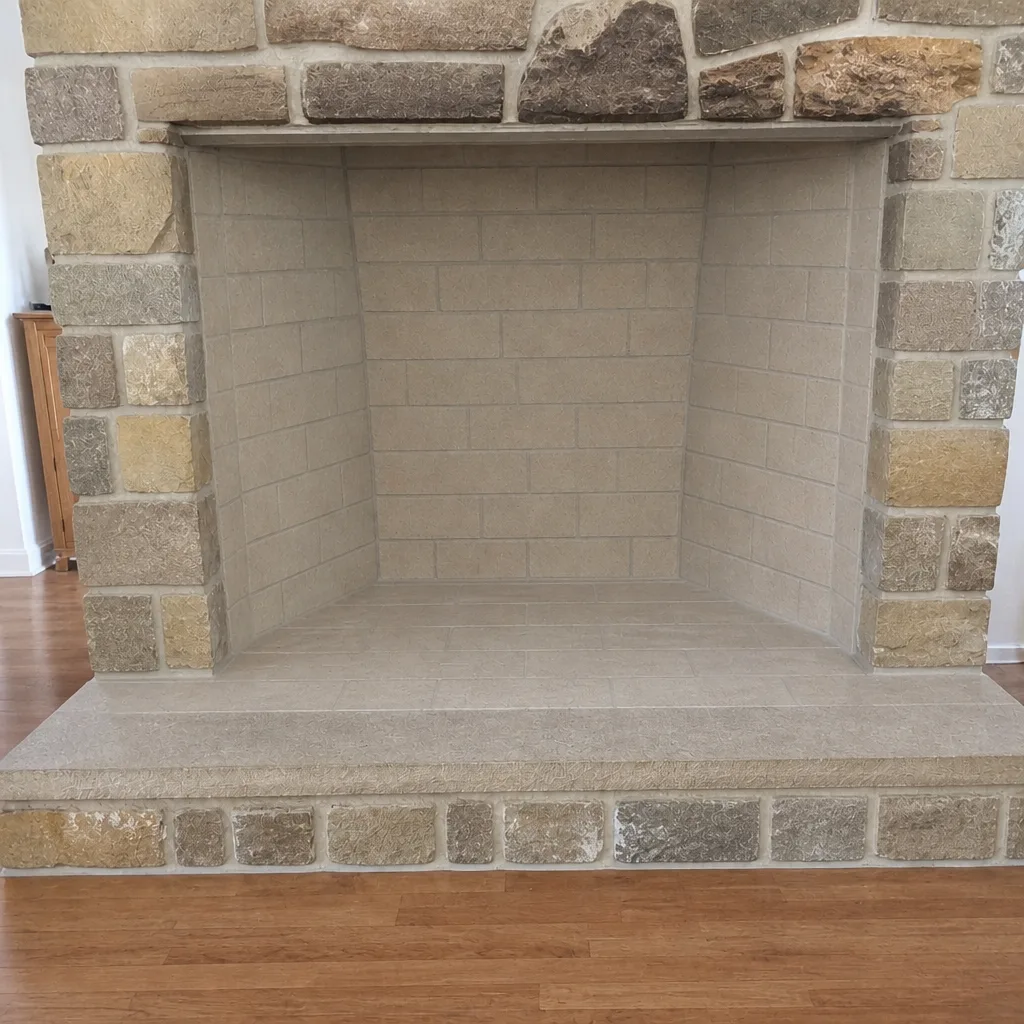
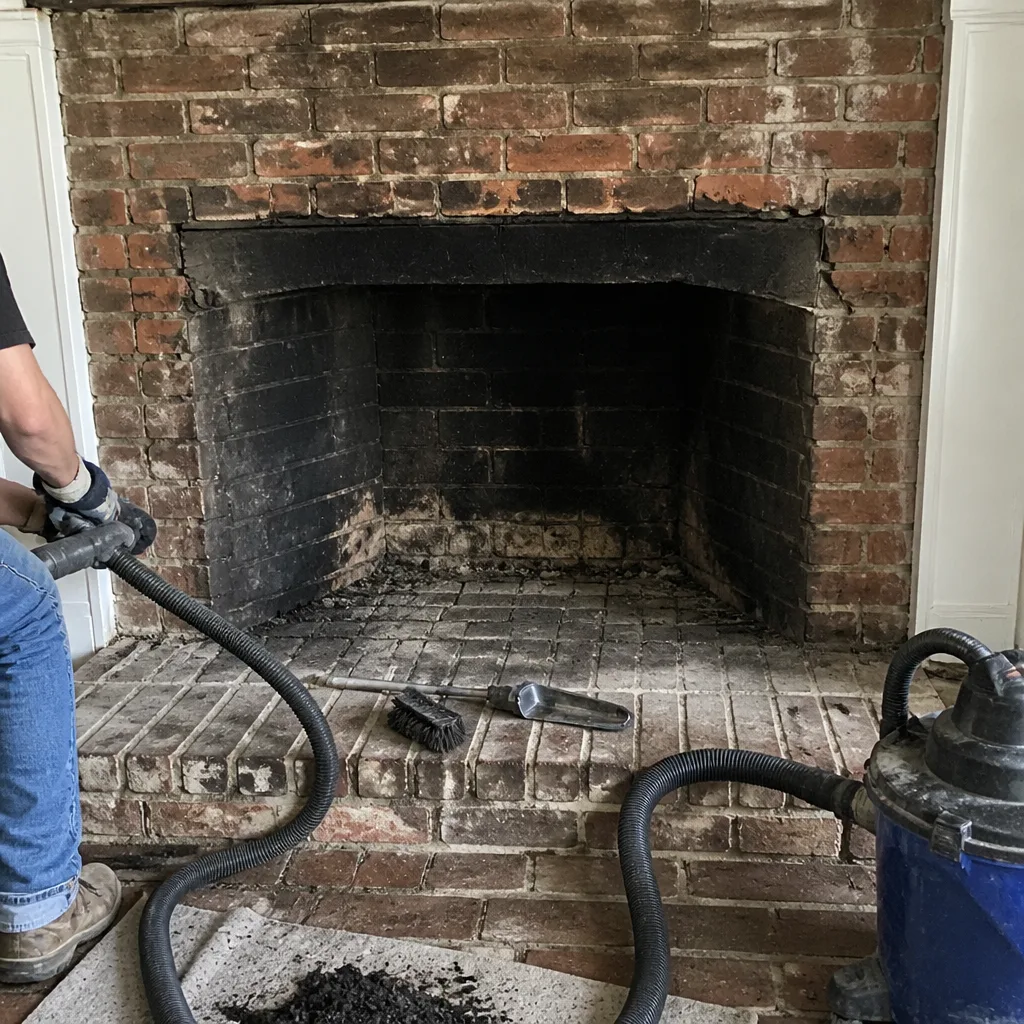
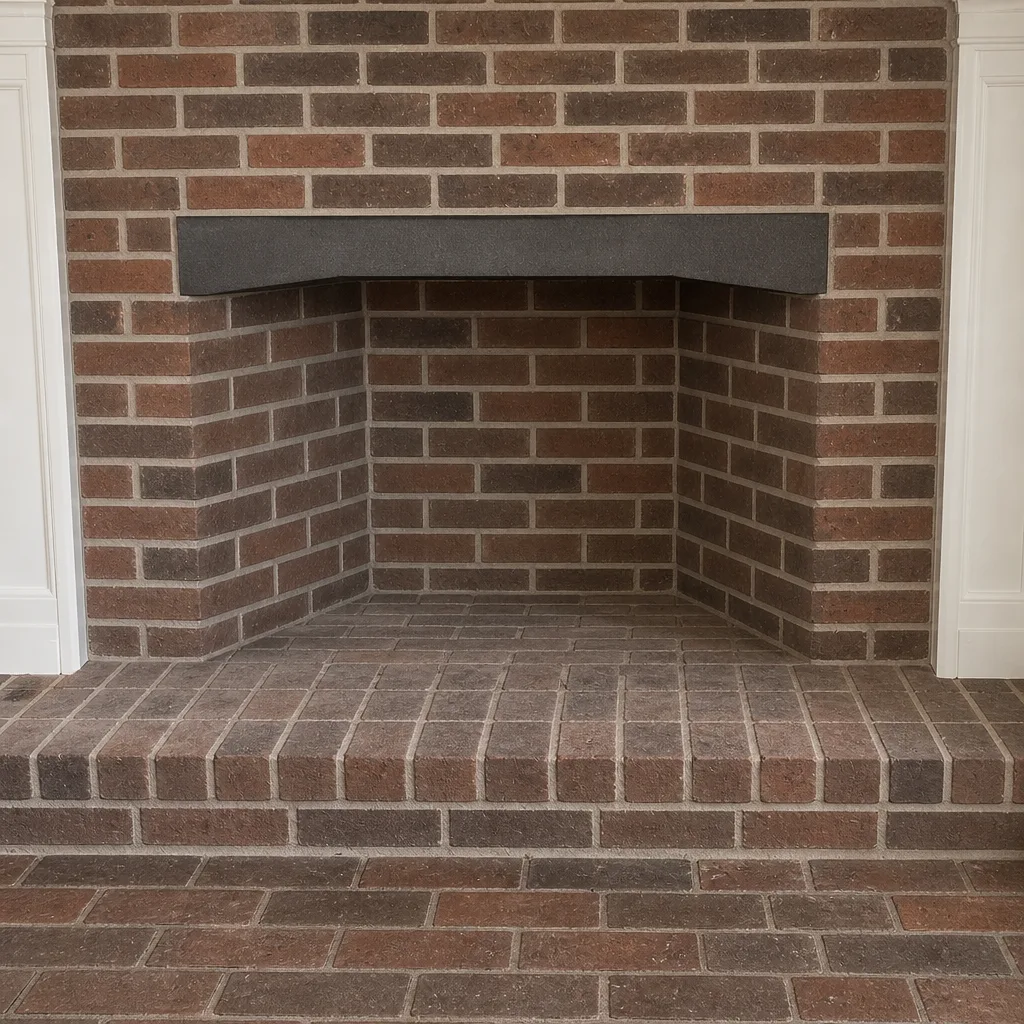
See the difference
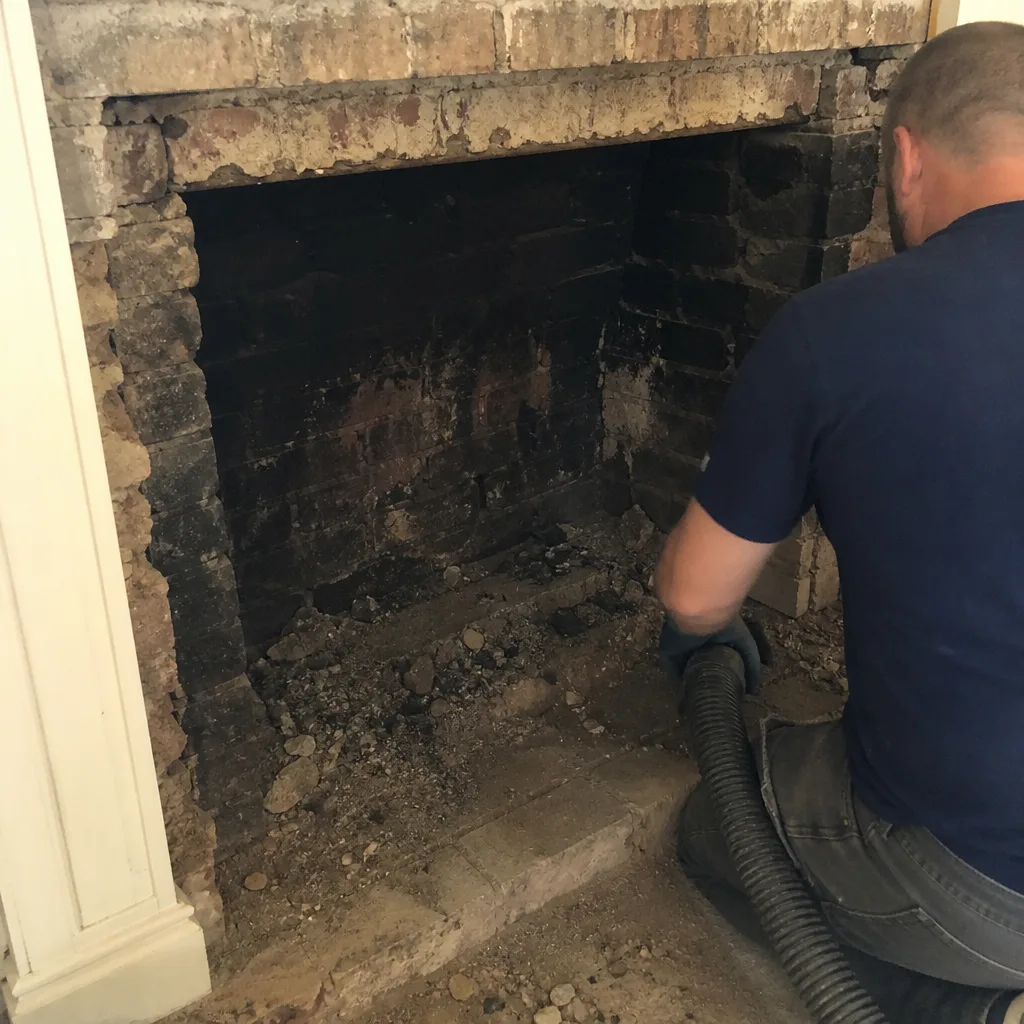 Before
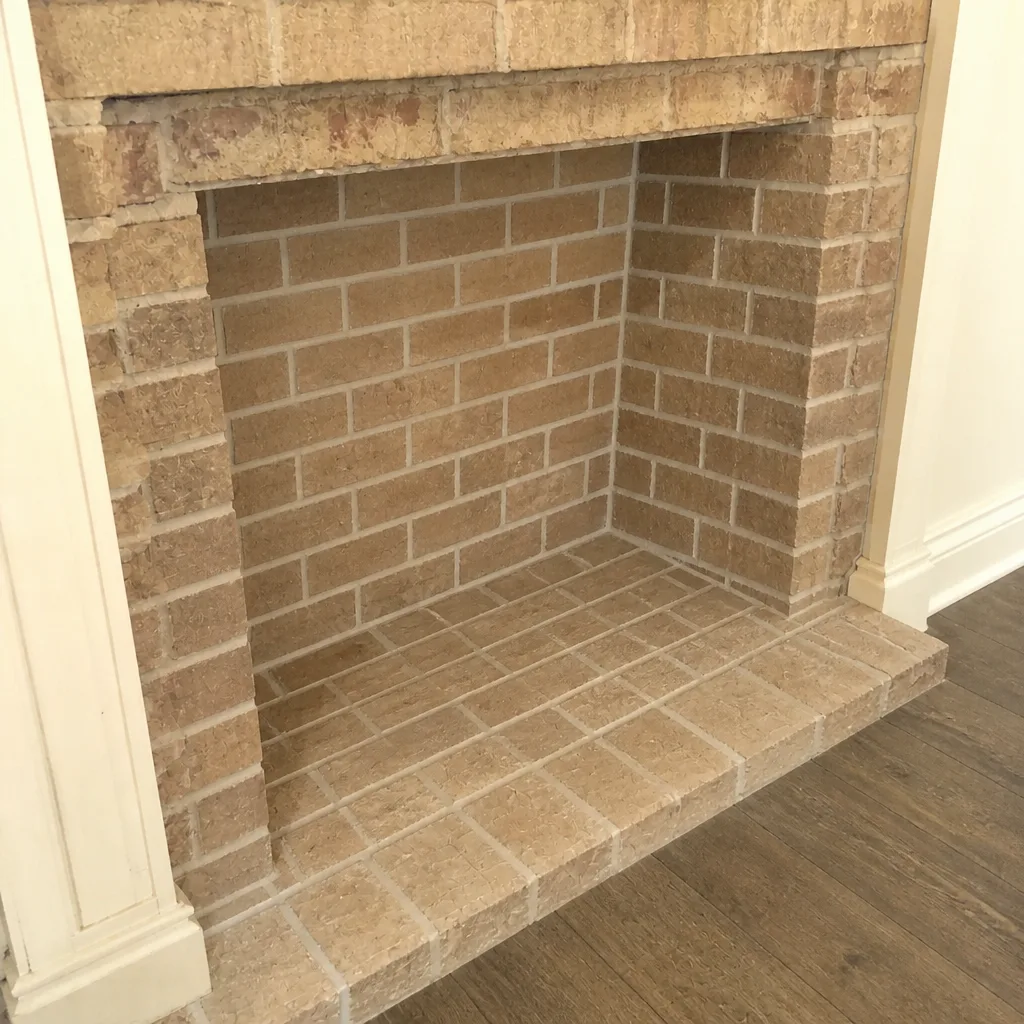 After
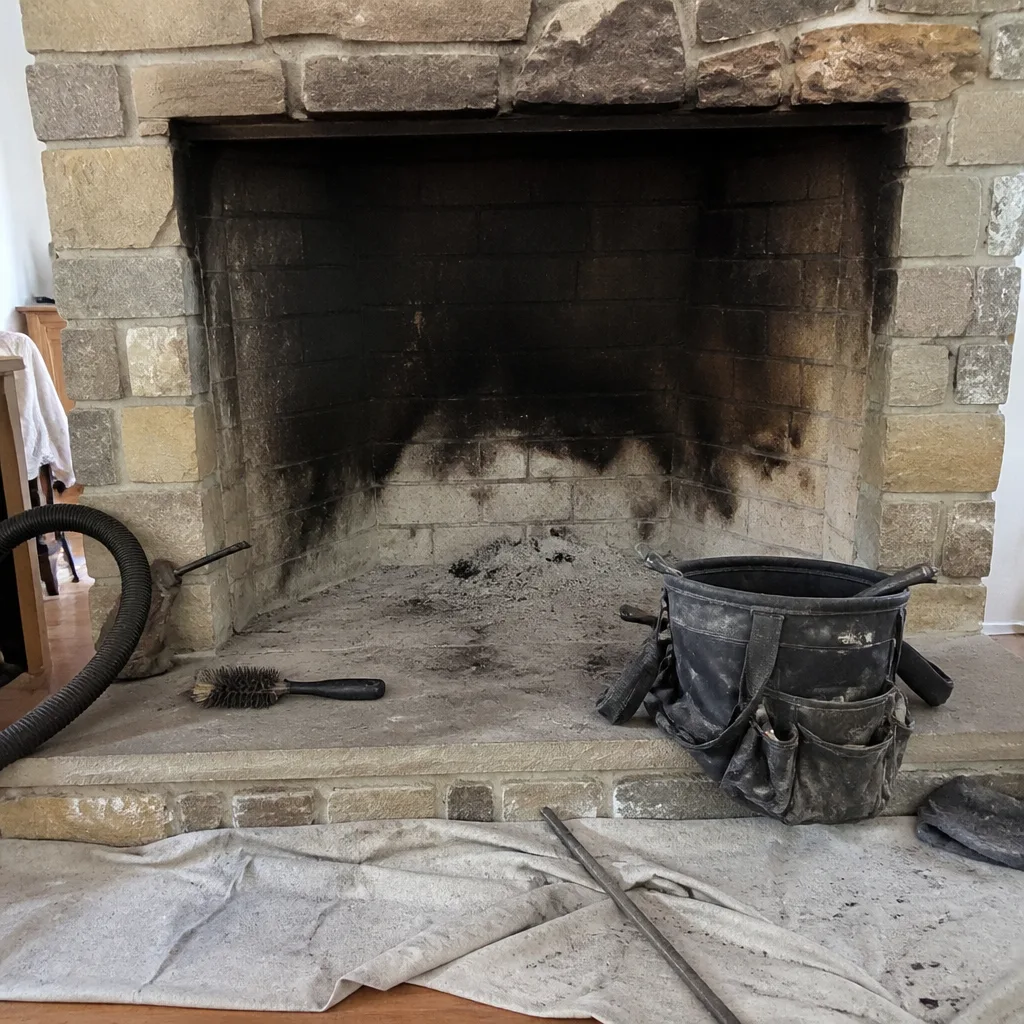 Before
 After
 Before
 After
When to Call a Professional
Call a professional if you’re seeing smoke rollback, a strong chimney odor with no fire lit, falling debris in the firebox, or water entering the firebox during rain. Those are the signs worth diagnosing promptly. Also call if it’s been more than a season since your last sweep, if a home inspection flagged the chimney, or if you’ve noticed efflorescence that’s returned after cleaning. Our technicians have up to 12 years of experience, and the job always begins with a diagnostic inspection – we inspect before we recommend, and we don’t recommend work that the camera evidence doesn’t support. Chimney Sweep Five Points offers free estimates in Five Points – call (855) 658-5081. We answer 24/7, with fast dispatch from 7am to 7pm, Sunday through Friday.
Frequently Asked Questions
The most common warning signs are white staining on the exterior (efflorescence), crumbling mortar joints, a cracked crown, a missing or damaged cap, smoky odors with no fire lit, and smoke rollback. Less common but more urgent are falling debris in the firebox, water entering the firebox during rain, and visible animal nesting material. Five Points homeowners most often notice the exterior signs first because they’re visible from the yard, and the interior signs second because they only appear after a fire.
White staining (efflorescence) is a water-migration indicator, not necessarily an emergency. It tells you where your masonry is absorbing moisture and where mortar will fail next. It’s worth diagnosing promptly if the stains keep returning after cleaning, if you can see spalling brick underneath, or if the staining is concentrated near the crown or firebox. A diagnostic inspection is the right next step, not a panic repair.
Cleaning is indicated by a season’s worth of use, a strong odor, or visible soot buildup; repair is indicated by exterior or interior damage – crumbling mortar, a cracked crown, a missing cap, smoke rollback, or water intrusion. The two are often diagnosed together in a single visit. A sweep and a level-one inspection will tell you which is which, and that’s the honest starting point for any chimney conversation.
A Level I inspection is a visual check of readily accessible parts of the chimney and firebox – appropriate for a chimney in steady use with no changes since the last inspection. A Level II inspection uses a camera to look inside the flue and is appropriate after a chimney fire, after a change in fuel or appliance, when buying or selling a home, or when there’s evidence of a flue problem. Our sweep service includes a camera inspection, so you can see what we’re seeing.
Yes, in most cases. A cracked crown can usually be repaired or replaced without touching the rest of the chimney, especially if the water damage hasn’t worked its way into the masonry below. We install crowns from Gelco, Olympia Chimney, and Famco specifically because they’re made for chimney applications and hold up better than generic substitutes. If the crown failure has already reached the flue tiles or the masonry, the repair scope changes and the inspection will tell us how far it goes.
Not every deteriorating flue needs a full liner replacement. HeatShield resurfacing can restore a deteriorating flue without a full reline when the flue tiles are intact enough to hold it and the damage is limited to the inner surface. A full reline with DuraFlex is the right answer when the flue structure itself is compromised, when tiles are missing or offset, or when the appliance requires a specific liner size. The camera tells you which is which – that’s why we don’t recommend work without it. Call (855) 658-5081 for an exact quote – estimates are free.
Most chimneys should be swept once a year if they see regular use. That’s a general industry norm, not a Five Points-specific rule, and your specific frequency depends on how much and what you burn. Seasoned hardwood produces less creosote than unseasoned softwood, and a gas fireplace needs less attention than a wood-burning one. If you’ve had a chimney fire, a change of appliance, or a change of fuel, get an inspection regardless of time since the last sweep.
The Bottom Line
Chimney warning signs are information, not emergencies. Efflorescence tells you where water is entering. Crumbling mortar tells you where repointing is needed. Smoke rollback and odors tell you the flue isn’t venting the way it should. The point of this guide isn’t to send you running for the phone on every loose detail – it’s to help you distinguish the signs that need prompt attention from the ones with a reasonable window. From cap to firebox, professional-grade parts and materials matter for both buckets. So does seeing the evidence yourself before you agree to repair work. If you want a diagnostic conversation about what you’re seeing, our chimney cap & crown page covers the two exterior failures that drive most water damage, and Chimney Sweep Five Points is the place to start for the full-system view.
If you’re ready to schedule a diagnostic visit, call (855) 658-5081. We answer 24/7. Fast dispatch from 7am to 7pm, Sunday through Friday. We start every job with an inspection, show you what we find on camera, and quote the repair honestly – never a recommended job without the evidence to support it.
Written by the team at Chimney Sweep Five Points.