
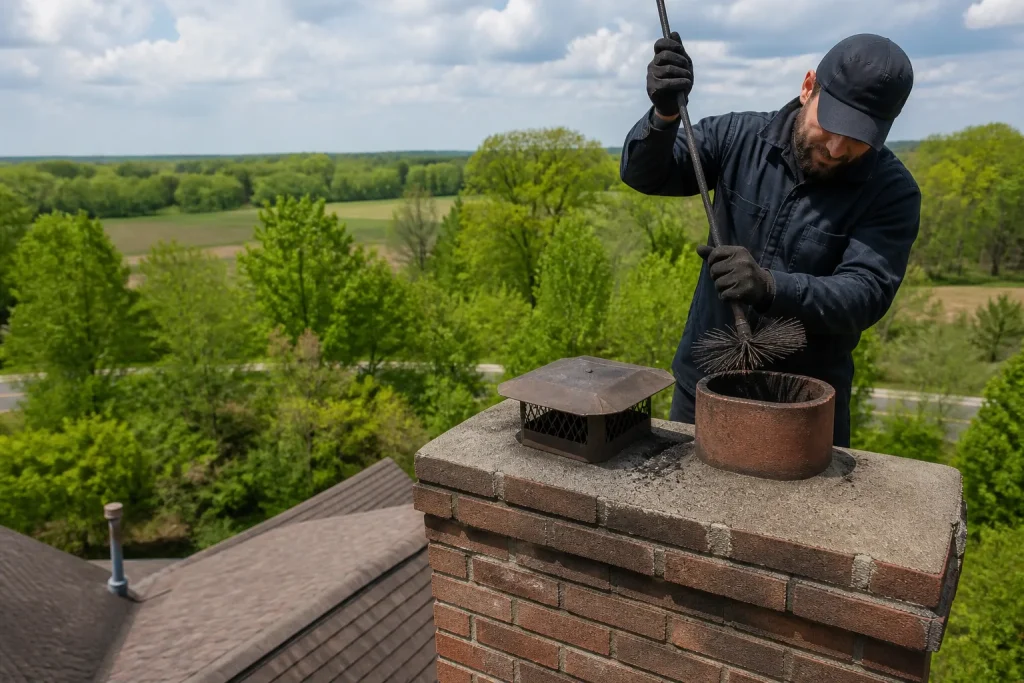
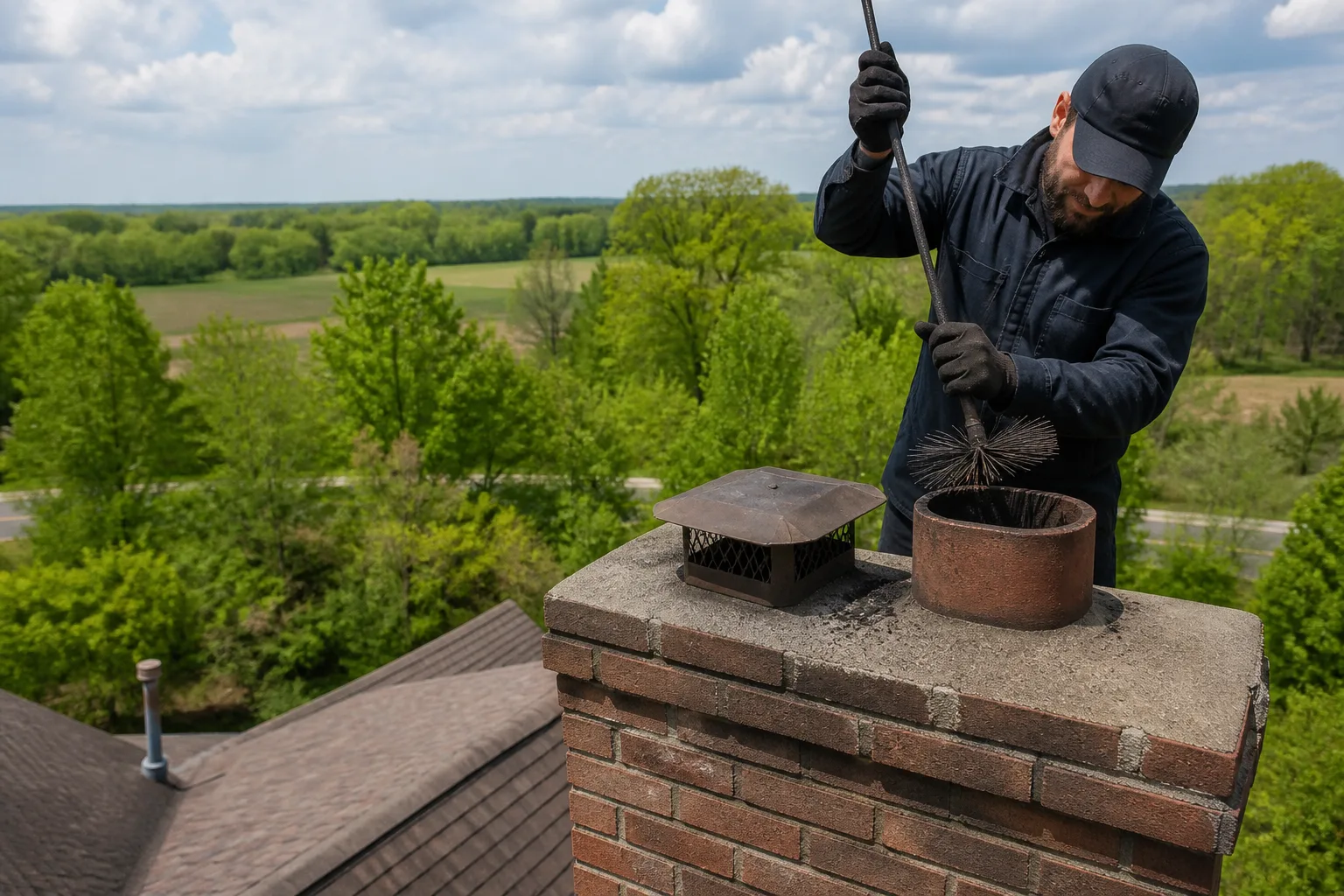
DuraFlex Chimney Sweep in Five Points: A Homeowner’s Guide
If a contractor recommends a DuraFlex liner and you’ve never heard the name, that’s not a red flag. It usually means you’re talking to someone who works with professional-grade liner systems rather than generic parts. DuraFlex is a flexible stainless steel liner system, and in Five Points homes with aging or damaged flues, it solves a specific set of problems that rigid liners sometimes can’t. This guide explains what it is, when it’s the right answer, and what to ask before you approve the work.
If you’d rather have someone look at your flue before you decide anything, call (855) 658-5081 and we’ll set up an honest inspection.
Key Takeaways
- DuraFlex is a flexible stainless steel liner, not a rigid sectional liner. It’s built for the flues that rigid pipe struggles to fit.
- Five Points has a lot of older masonry chimneys, and offset flues are common in them. That’s where flexible liners earn their keep.
- A liner decision affects the whole system: cap, termination, and appliance connector all have to be specced together.
- DuraFlex isn’t universal. Sometimes a rigid liner or a HeatShield resurfacing is the smarter call, and a good contractor will tell you so.
What Is DuraFlex, Exactly?
DuraFlex is a flexible stainless steel chimney liner system. Instead of rigid pipe sections that get joined together as they go up the flue, DuraFlex comes as a continuous flexible length that bends around corners and conforms to the shape of the existing chimney. It’s a professional-grade product, which is part of why most homeowners only hear about it during a relining conversation.
Here’s the practical difference. A rigid liner needs a fairly straight, fairly uniform flue to go in cleanly. The moment a chimney has an offset, a bend, or a cross-section that changes partway up, rigid sections become a fight. Flexible liner is designed for that reality. It snakes up a flue that isn’t perfectly plumb and comes out the top where it needs to.
That flexibility is also why generalist sweeps often don’t carry it. It takes a certain comfort level to install, and the termination and cap work at the top has to be done correctly. When we recommend DuraFlex in Five Points, it’s because the flue geometry calls for it, not because it’s the only liner we know.
- Flexible construction: bends around offsets and irregular masonry profiles.
- Continuous run: fewer joints than sectional rigid pipe.
- Stainless steel: built to handle the heat and flue gases of a wood-burning appliance.
- System component: works with a dedicated top plate, cap, and appliance connector, not as a standalone tube.
When Does DuraFlex Fit Better Than a Rigid Liner in Five Points?
Flexible liner wins in Five Points whenever the flue isn’t cooperative. The neighborhood has a good share of older masonry chimneys, and those were rarely built with a perfectly straight, uniform flue. Offsets are common. Cross-sections change. Mortar joints are uneven. A rigid liner that would go in fine on a newer straight flue can be a genuine problem in a chimney like that.
Here are the conditions where we typically reach for DuraFlex:
- Offset flues. The chimney jogs partway up. Rigid sections need special offset fittings; flexible liner just follows the bend.
- Older masonry profiles. Uneven or out-of-square flues where rigid pipe leaves gaps or won’t seat properly.
- Tight clearances. Flues that are a little narrow for a rigid liner plus its insulation wrap.
- Angle of entry. Some fireplaces and appliance connections enter the flue at an angle that rigid pipe doesn’t like.
- Damaged or spalled interior. A flue that’s lost some surface integrity and needs a liner to contain the flue gases safely.
If your chimney is straight, sound, and well-sized, a rigid liner may be the better and more economical choice. The point is that the liner has to match the flue, not the other way around. We inspect before we recommend, because the flue geometry decides this, not a product preference.
How Does the Liner Fit Into the Rest of the Chimney System?
A liner is never just a liner. It’s one part of a system that runs from the appliance connector at the bottom to the cap at the top, and each piece has to be specced to work with the others. When we install DuraFlex in a Five Points home, the liner is only one line on the proposal. The termination at the top, the top plate, and the cap all have to match.
This is where working with dedicated chimney manufacturers matters. We source caps and crowns from makers like Gelco, Olympia Chimney, and Famco rather than hardware-store substitutes. A cap that doesn’t seal properly lets water in, and water is the slow killer of masonry chimneys. A liner installed perfectly but capped poorly is a job that comes back. So the cap and crown work gets planned at the same time as the liner, not bolted on afterward.
The appliance connector at the firebox end matters too. It has to transition cleanly from the appliance to the liner, and the flue size has to be right for the appliance. Get any part of that wrong and you get draft problems, smoke, or worse. From cap to firebox, the system has to be designed as one thing. That’s the reason we handle chimney cap & crown work alongside relining rather than handing it to a second contractor.
What Does a Proper DuraFlex Installation Look Like?
A real DuraFlex installation starts with a Level II inspection. That means a camera run up the flue to see the actual condition, plus a look at the firebox, damper, smoke chamber, and the crown and cap at the top. You can’t size or spec a liner without knowing what the flue looks like inside. Anyone who quotes a liner without looking at the flue is guessing.
From there, here’s what the job should involve:
- A written proposal that names the liner, the termination, the cap, and the connector, with a price that holds.
- Flue preparation – cleaning and clearing any obstructions before the liner goes in.
- Correct sizing for your appliance, not a one-size-fits-all diameter.
- Insulation where the flue calls for it.
- Proper termination at the top, sealed against water entry, with a cap that fits the liner and the crown.
- A final inspection to confirm the fit and draft.
When you’re reviewing the proposal, ask these questions: What warranty comes with the liner, and what does it cover? Is insulation included? Who installs the cap and termination, and are they matched to the liner? Is the connector included? Are you certified to install this product? A specialist will answer all of these without flinching. Someone pushing a generic liner will get vague. Our technicians have up to 12 years of experience with this work, and we’ve seen how a poorly specced system behaves.
Is DuraFlex Always the Right Answer? No.
Flexible liner is a strong solution, but it isn’t universal. Saying otherwise would be a sales pitch, not advice. There are cases where a different liner approach makes more sense, and there are cases where you don’t need a full liner at all.
The clearest example is a flue that’s deteriorated but structurally sound. Sometimes the interior surface has broken down, but the chimney as a whole is fine. In those cases, a HeatShield resurfacing can restore the flue without a full reline. That’s the restore-before-you-replace path, and it can save real money when it’s the right fit. Most sweep-only companies can’t offer it because they don’t carry the product or the certification to apply it. We do, and we’ll tell you when it applies.
Rigid liner is also the better call on a straight, sound flue where the sizing works. It’s simpler, and there’s no reason to pay for flexibility you don’t need. A flexible liner on a flue that would take rigid pipe is money spent on a solution to a problem you don’t have.
The honest answer is that your flue decides. We inspect, we show you the camera footage, and we recommend based on what we see. If a liner isn’t warranted, we’ll say so and tell you what can safely wait. A cracked crown or a loose cap is often a smaller job than a full reline, and you shouldn’t be pushed toward the big one.
When to Call a Pro
If you’re seeing smoke rolling back into the room, a cracked or missing cap, water staining on the firebox, or a home inspection that flagged the flue, that’s the point to get eyes on it. Any of those can point to a liner problem, or to something simpler. Call (855) 658-5081. We answer 24/7. Fast dispatch from 7am to 7pm, Sunday through Friday.
Related services in Five Points: chimney sweep, fireplace repair, and full liner and cap work under one roof.
The Bottom Line
DuraFlex is a flexible stainless steel liner system built for the flues that rigid pipe can’t handle cleanly: offset flues, older masonry profiles, tight clearances. In Five Points, those conditions come up often in older homes. Knowing what it is and when it’s appropriate lets you read a proposal with clear eyes instead of taking the contractor’s word for it.
The main things to take away:
- DuraFlex is a professional-grade system, and hearing the name usually means you’re talking to a specialist.
- It fits best where the flue has offsets or irregular masonry. On a straight, sound flue, rigid is often better.
- The liner is one part of a system. Cap, termination, and connector all have to match.
- Get a Level II inspection with camera footage before you approve any liner work.
- Sometimes resurfacing with HeatShield beats a full reline. Ask.
At Chimney Sweep Five Points, we handle the whole system from cap to firebox: sweeping, Level I and Level II inspections, cap and crown work, fireplace repair, and structural chimney repair. One company, one point of accountability, no handoffs. If you’re in Five Points and want a straight answer on your flue, Chimney Sweep Five Points offers free estimates.
Call (855) 658-5081. We answer 24/7. Fast dispatch from 7am to 7pm, Sunday through Friday. A free estimate includes a camera inspection and a photo report, so you can see what we see before you decide anything.
Frequently Asked Questions
Not universally. DuraFlex is better when the flue has offsets, uneven masonry, or a profile rigid pipe can’t fit cleanly. On a straight, sound, well-sized flue, a rigid liner is often the simpler and more economical choice. The flue decides which one fits, not the product.
A Level II inspection with camera footage tells you. If the flue is intact and properly sized for the appliance, you may not need a liner. If the interior has deteriorated or the flue is unlined in older masonry, a liner may be necessary for safe operation. We show you the footage and explain what we see before recommending anything.
Ask what warranty comes with the liner and what it covers, whether insulation is included, who installs the cap and termination, whether the appliance connector is included, and whether they’re certified to install the product. A specialist answers these clearly. If the answers are vague, wait.
Sometimes. A wrong-sized or damaged flue can cause smoke to roll back into the room, and a properly specced liner can correct it. Other times the issue is the cap, the damper, or the smoke chamber. That’s why the inspection comes first. Call (855) 658-5081 for an exact assessment and a free estimate – the written price is set per job before any work starts.
Written by the team at Chimney Sweep Five Points.
Need Chimney Cleaning Help?
Call Chimney Sweep Five Points - the local pro we connect you with is licensed and insured, here with fast help in Five Points.
(855) 658-5081